

Digging into the Law: Legal Cases Involving Dinosaurs

Although dinosaurs themselves have been extinct for quite some time, that is not stopping them from making headlines in court cases in the recent past. This article “digs” in to a few dinosaur cases that have clawed their way into the spotlight.
The Celebrity Skull Case
Back in 2007, the Oscar winning actor Nicolas Cage bought a Tyrannosaurus bataar skull at auction for a whopping $276,000. Unaware that this fossil was actually considered stolen property of the county of Mongolia, Cage took possession of the skull following his winning bid. The government of Mongolia sued for the artifact to be returned to them on the grounds that it was unlawfully brought into the United States. After this interesting court battle, it was deemed that it was in fact property of the government of Mongolia, and Cage consented to its forfeiture. The case was titled “United States v. One Tarbosaurus Bataar Skeleton” (This is the way that cases are titled in forfeiture actions. The result is sometimes unintentionally funny case titles.)
The Subpoenaed T-Rex
In a case that was decided in 2001 in Charlotte, N.C., Lyons Partnership, the owners of Barney the purple dinosaur, took legal action against Morris Costumes and their owners. Lyons Partnership accused Morris Costumes of renting and selling animal costumes that looked very similar to Barney. The names of the animal costumes that resembled Barney were names such as Duffy the Dragon, Purple Dino, and Hillary the Hippo. Lyons sought $300,000 for what they believed was willful infringement. As part of the lawsuit, the actual Barney costume was subpoenaed to court by attorney Jay Bilas (now a popular ESPN analyst), which caused quite a stir in the courthouse. Following this excitement, the U.S. District Judge ruled that the Duffy the Dragon costume was not infringing on Barney’s copyright, but did find the other two were infringing. The court also determined that Morris Costumes did not willfully infringe, which meant Lyons could not collect their damages.
The Custody Battle for "Sue"
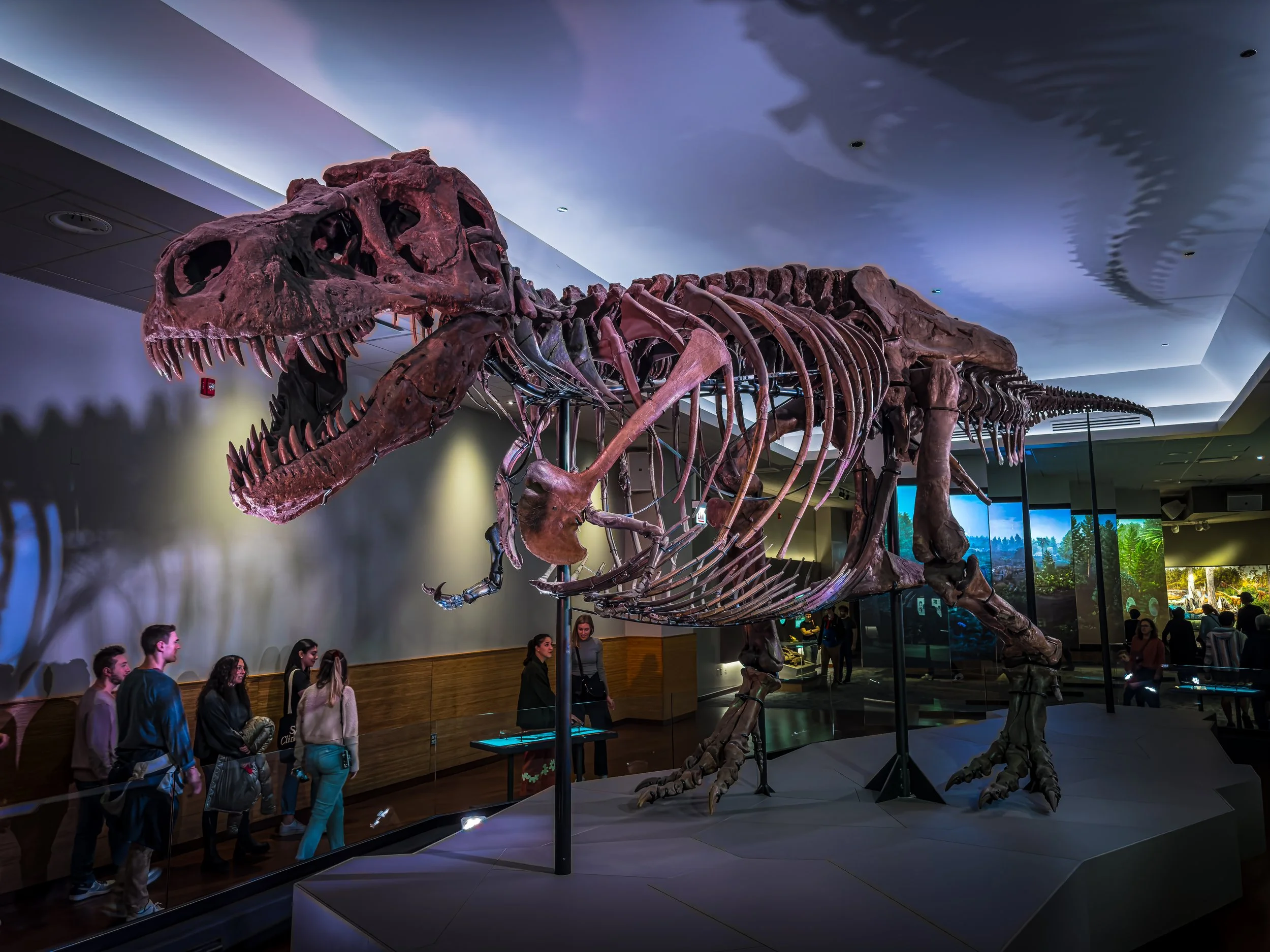
Back in August of 1990, fossil hunters from the Black Hills Geologic Institute discovered the remnants of an almost complete Tyrannosaurs Rex skeleton out in the Badlands of South Dakota. After their major discovery, they named her “Sue”, controversy began to brew. The owner of the land where they found Sue, a Native American rancher named Maurice Williams, was given $5,000 by Black Hills for the excavation of Sue. However, the market value for a skeleton like Sue’s was over 8 million dollars at the time. After this disparity entered the public discourse, Williams filed suit claiming that the $5,000 he received was just for Black Hills to inspect the property, and he sought recovery for the full market value of the dinosaur skeleton. During the pendency of the action, several parties claimed ownership of Sue – Williams, Black Hills, the Cheyenne River Sioux tribe (Williams' land was within the boundaries of their reservation) and the United States government, which claimed they held the land in trust for Williams. Ultimately, the Eighth Circuit Court of Appeals ruled against Black Hills and determined that government permission would have been required before any part of the Land, including the dinosaur skeleton, was sold. Since Black Hills did not seek government permission, it did not have any rights to claim ownership of Sue. The court determined that the US government held the fossil in trust for Williams, and the fossil was later sold at auction and is currently on display at the Field Museum in Chicago.